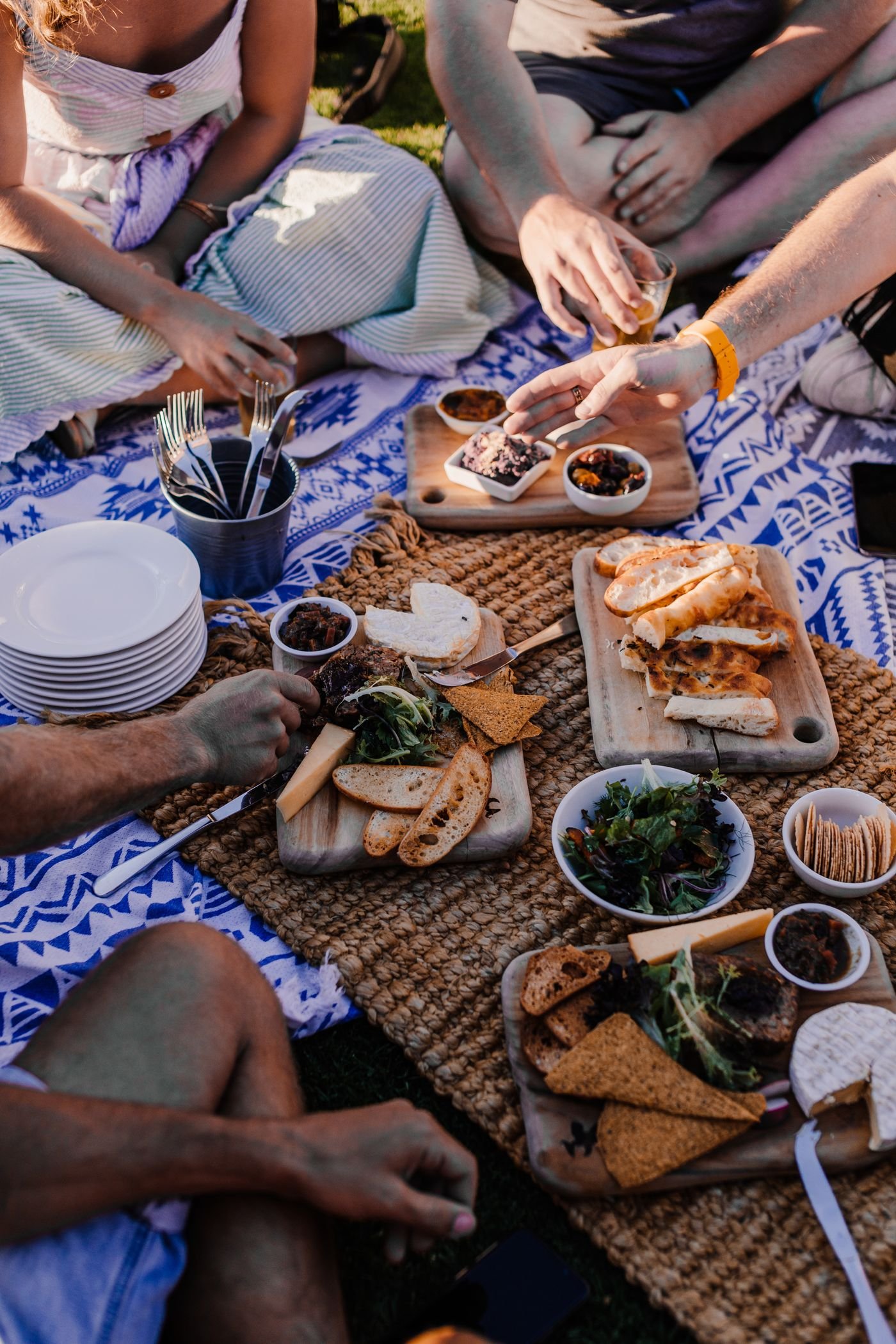
Living on the coast means a beach picnic is a regular plan rather than a special occasion, but it also means packing food that has to survive real heat, direct sun and a breeze that puts sand into everything left uncovered for more than a minute. We have packed enough coolers for enough afternoons to know which foods make it home intact and which ones do not survive the trip.
The temperature danger zone
Food safety on a hot day comes down mostly to time and temperature, and the range where bacteria multiply fastest sits well within the range of a typical beach afternoon. Anything perishable should spend as little time as possible sitting out once it is unpacked, which in practice means packing a small dedicated cooler just for the items that need to stay cold rather than one large cooler that gets opened and closed all day, letting warm air in every time.
We pack the cooler with the items needed last on the bottom and the items needed first on top, so it does not need to be dug through repeatedly. Ice packs go on top of food rather than underneath, since cold air sinks, and a fully packed cooler holds its temperature far longer than a half empty one, so we fill any extra space with additional ice rather than leaving air pockets.
What holds up in heat and sand
Some foods are simply better suited to sun and sand than others. Dense items like roasted vegetables, grain salads made with a vinegar forward dressing rather than a mayonnaise based one, and firm fruit like watermelon or grapes travel well and are forgiving if they sit out a little longer than planned. Anything with mayonnaise, soft cheese, or cooked seafood needs closer attention to timing and should come out of the cooler only when people are ready to eat, not before.
A picnic is really a logistics exercise with good food attached, and the logistics matter just as much as the recipes.
Whole fruit that needs no cutting until the last minute, individually wrapped items, and anything that can be eaten with fingers cuts down on the utensils, cutting boards and extra hands that sand tends to find its way onto. We have learned to skip anything that needs to be sliced or plated on site, since a beach breeze turns that into a losing battle almost immediately.
Packing so nothing gets crushed
Structure matters more for a beach picnic than for almost any other kind of packed meal, since a bag gets tossed around in a car and then carried across uneven sand. Rigid containers beat bags for anything that can be crushed, and we pack soft items like bread or delicate fruit on top of everything else, never underneath a cooler or a heavy water jug. Sandwiches wrapped tightly and packed on their sides rather than flat hold together better once they have been jostled for half an hour.
We also bring more water than seems necessary and treat it as separate from anything meant to be a drink with a meal, since heat and sun push water needs higher than people expect, especially for kids running around in the sun most of the afternoon. A refillable jug with ice packed alongside it keeps drinking water cold for hours without taking up cooler space that could go toward food.
None of this requires special gear beyond a good cooler and some rigid containers, but it does require thinking about the trip itself as part of the meal rather than an afterthought. The best beach picnic is the one where nobody remembers the packing at all, only the eating.

Hannah plans every shoot around natural light from our east windows and a very short prop shelf. She writes the plating notes on our recipes and keeps a running list of garnishes that survive humidity.