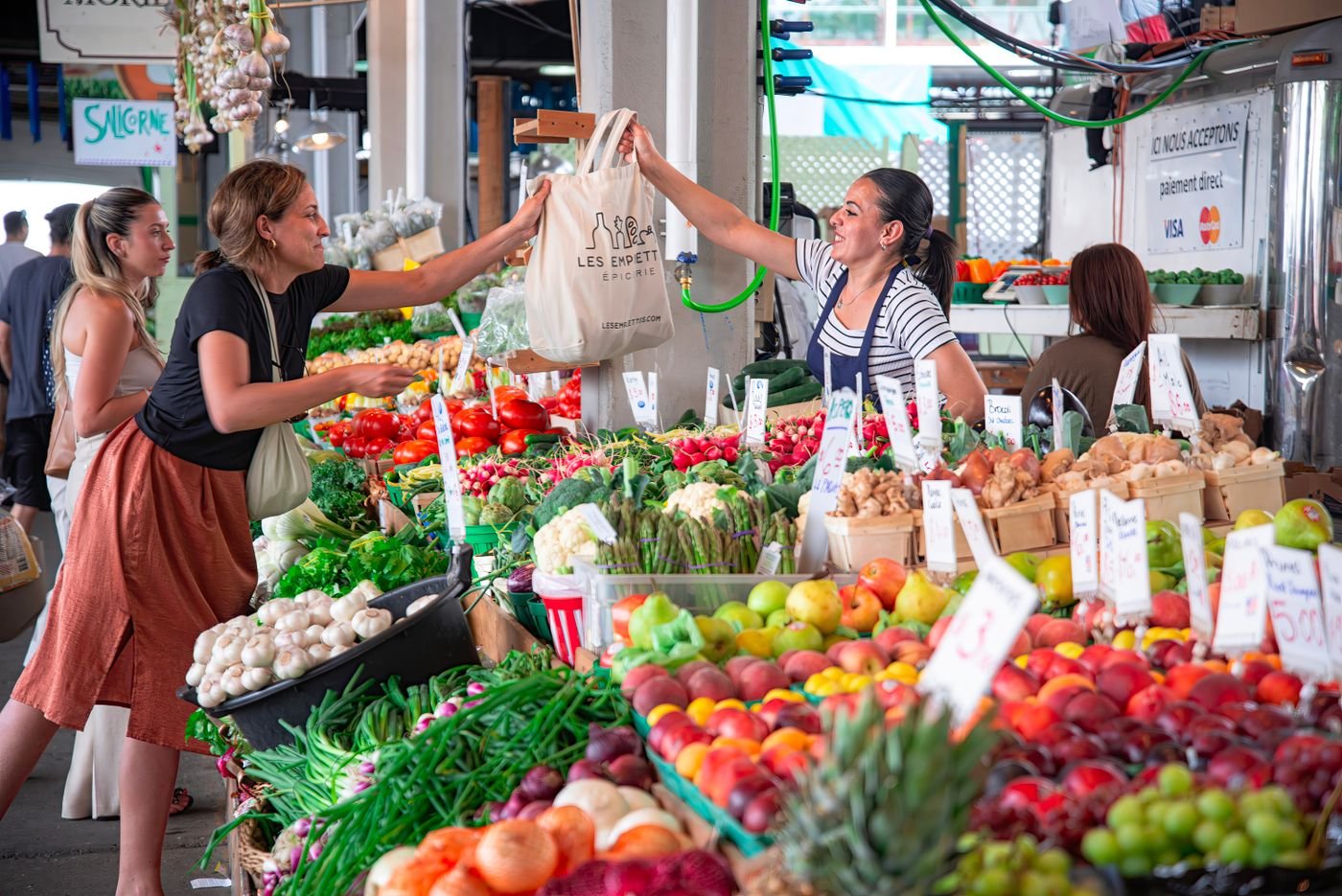
We show up early, before the coffee stand has a line and before the good tomatoes disappear into other people's bags. A Saturday market rewards people who move with a plan and a loose one at that, because the whole point of shopping this way is to let the produce set the menu instead of the other way around.
Start at the edges, not the middle
Most markets put staples toward the front and specialty stalls further back, so the temptation is to fill a bag before you have seen everything on offer. We walk the entire loop once with empty hands before buying a thing. That first pass is just reconnaissance: which stall has stone fruit that still smells like something, whose greens look like they were cut that morning instead of three days ago, where the line is already forming because word has gotten around. Only after that full circuit do we double back and start filling the bag.
This matters more in a humid climate than people expect. Produce that traveled a long way and sat in a truck overnight wilts fast once it hits warm, wet air, so a stall with a short supply chain is worth seeking out even if the selection looks smaller. Ask how far the food traveled. Most growers are happy to tell you, and the answer tells you a lot about how it will hold up in your kitchen over the next few days.
Talk to the people selling the food
The single best habit we can recommend is also the simplest: ask questions. Ask what came in that morning versus what has been sitting since the day before. Ask what a grower does with the odd shaped or slightly bruised produce that does not make it into the pretty pile, because that is often sold at a discount if you just ask. Ask what is about to peak, since a grower usually knows a full week before the rest of us that a particular crop is about to hit its best stretch.
The best ingredient in our kitchen most weeks did not come from a plan. It came from someone at a stall telling us what was better than usual that day.
We have built entire weeknight meals around a five minute conversation at a stall selling nothing but greens. The grower mentioned that a certain variety gets bitter fast once it bolts in the heat, so we bought twice as much as intended and used it across three different meals before it turned. That kind of information does not show up on a label.
Build the week backward from what looks good
Instead of arriving with a list of specific recipes, we arrive with a loose sense of what kinds of meals we want to eat and let the stalls fill in the details. A market haul heavy on peppers, onions and a bundle of cilantro points toward something braised or something grilled. A bag full of soft lettuces and herbs points toward simple plates that need almost no cooking, which is exactly what you want once the afternoon heat sets in.
We also buy a little more than we think we need of anything that freezes or pickles well, because a market trip only happens once a week and a kitchen with nothing fresh in it by midweek is a kitchen reaching for less interesting food. Herbs get chopped and frozen in a little water or oil the same day. Extra citrus gets juiced and frozen in small portions. None of this takes more than fifteen minutes once you are home, and it means the market trip pays off for the whole week rather than just the first two days.
What we skip
Not everything at a market needs to come home with us. Anything that looks identical to what the grocery store sells for less is not worth the premium unless it is genuinely fresher, and it is fine to say so out loud to a vendor rather than buying out of obligation. The market works best as a relationship, not a transaction, and vendors we have bought from for years are the ones who now save us the good stuff before it even hits the table.
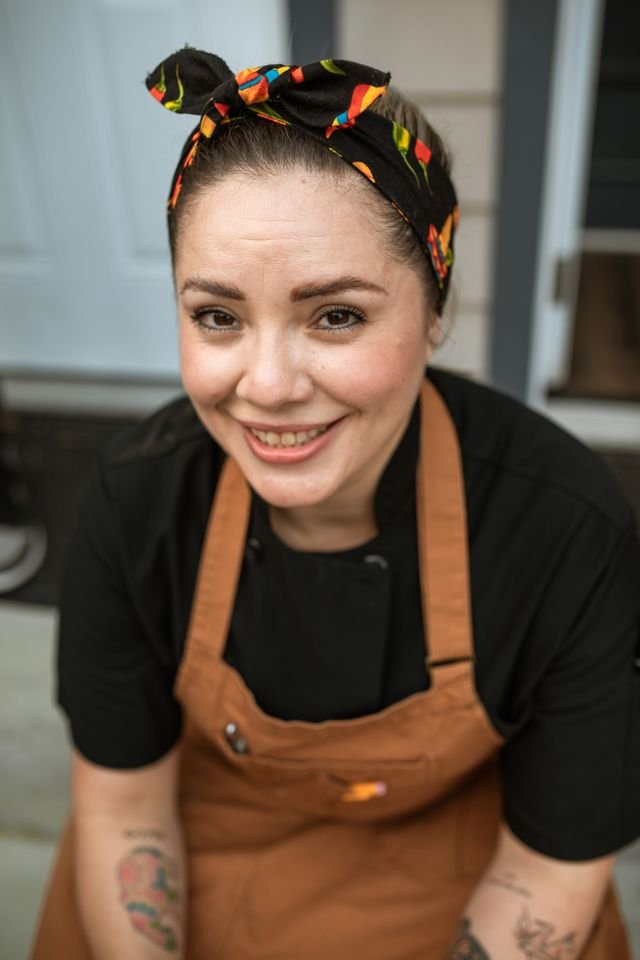
Marisol spent twelve years on the line in Miami and Fort Lauderdale before trading restaurant hours for a home kitchen and a notebook of family recipes. She decides what goes into the recipe box and still retests every Sunday braise herself.